Rookie
User who is approaching the world of karting for the first time. They have never owned a kart or have had one for only a few months. They lack all the basic and fundamental knowledge of this sport and need information to help them get oriented. They look for answers to questions such as: how do I prepare the fuel mixture? What tools do I need to manage a kart? What are the differences between car tire pressure and kart tire pressure? And how do I transport the kart to the track?
Intermediate
User who has been practicing karting for a longer time, personally managing their own kart. They know the basics of the sport, but want to stay updated on industry developments and receive advice to improve their skills as both mechanic and driver. They look for answers to questions such as: how do I install data acquisition systems and read basic data? How do I best manage tire pressure? How do I refine the gear ratio to improve performance? The practitioner may remain at this level for life, preferring not to deal with overly complex technical topics, but continuing to improve and enjoy karting.
Expert
This is a practitioner who is not satisfied with basic knowledge and wants to explore every aspect of driving and technical setup at the highest level. Their approach is almost professional. The distinction is clear: the practitioner stops when kart-related tasks become complex, for example replacing a piston or a spark plug, without going further into advanced operations such as cylinder honing. The expert, on the other hand, is not afraid to deal with highly complex tasks, such as independently balancing the crankshaft or adjusting the ignition timing.


 True or False
|
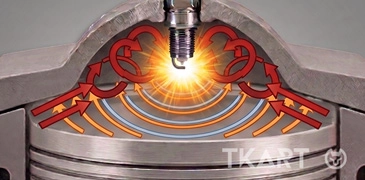
Squish in Kart Engines, What You Need to Know (and What You're Getting Wrong) - Part 3 of 3
True or False
|
Squish in Kart Engines, What You Need to Know (and What You're Getting Wrong) - Part 3 of 3
 Log in on TKART