HOMOLOGATION
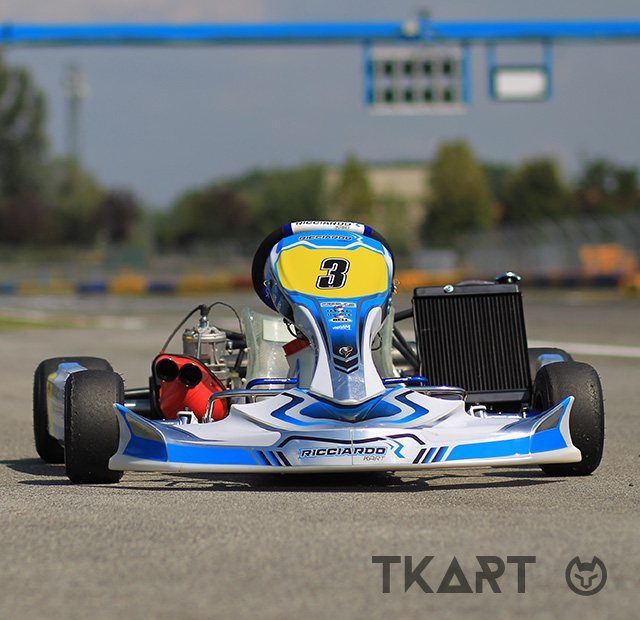
Born in 2015, the first Ricciardo Kart model is logically called DR01
KF - KFJ
CONFIGURATION
The kart is homologated for all categories. The one under review had a non-shifter configuration
30
TUBE DIAMETER
Crossbars and stringers are all 30 mm in diameter, the “standard” for KF and KFJ chassis
ROBOT
WELDING
Birel ART produces Ricciardo Kart chassis using innovative automatic welding machinery
ALUMINUM MAGNESIUM
COMPONENTS
Magnesium is used only to make hubs and rims. All other components are made of aluminum
Top partner
“Made in Birel ART” expertise and technology, with the name of a great champion. Let’s discover the Ricciardo Kart product in detail
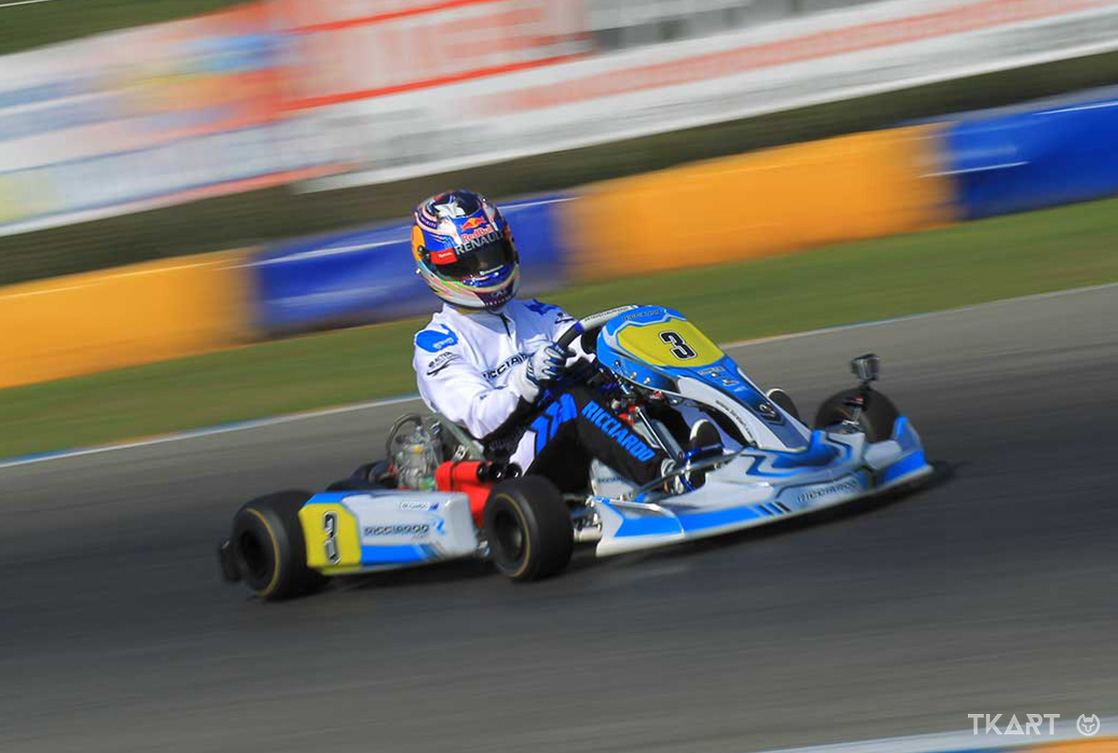
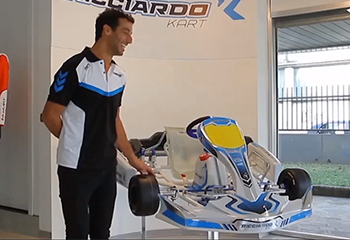
Daniel Ricciardo lent his name, enthusiasm and... face; but behind strong>his” kart there is the famous Birel ART factory. The legendary Italian company based in Lissone proposed, the Australian driver accepted, and voilà, the Ricciardo Kart brand now stands for a full line of vehicles covering a broad range of racing categories: KZ, KF, KFJ, Rotax and Mini. The model we analyze is the DR01 with a non-shifter configuration, so without shift lever or front brakes. Let’s start! For the front end of the DR, the company opted for an elongated solution compared to previous models, which proved to be well-performing with any kind of tire, especially at corner entry. As a consequence, the kart also features a reinforced steering shaft support . The adjustable heel rest system, aluminum pedals, and the camber and caster setting system with eccentric bushing, instead, are the same as previous Birel products.
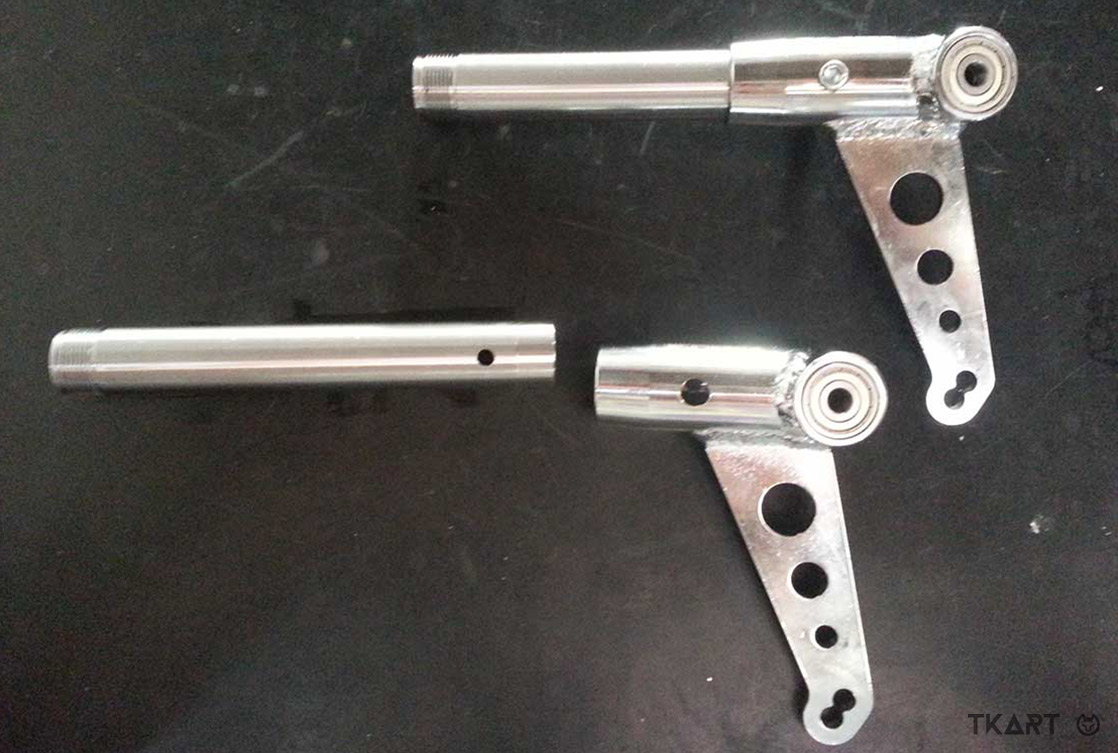
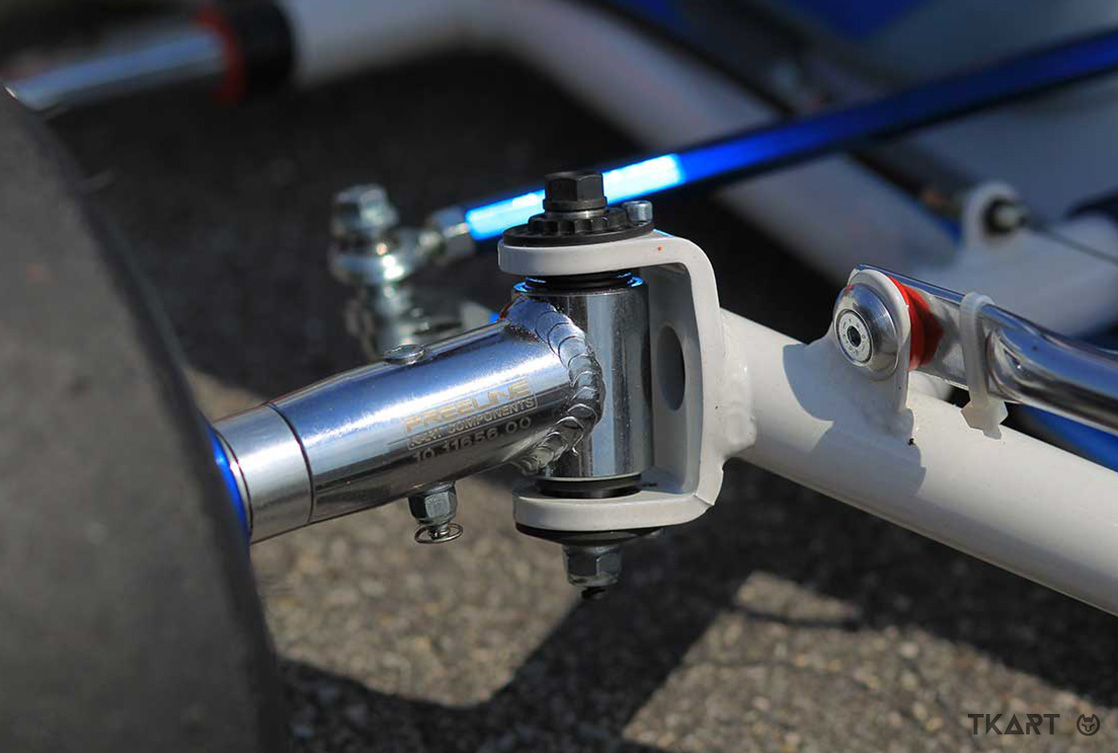
The multiple-hole bracket to connect the steering rods to the stub axles and the replaceable stub axle shafts yield a broad range of set-up optionsRead more
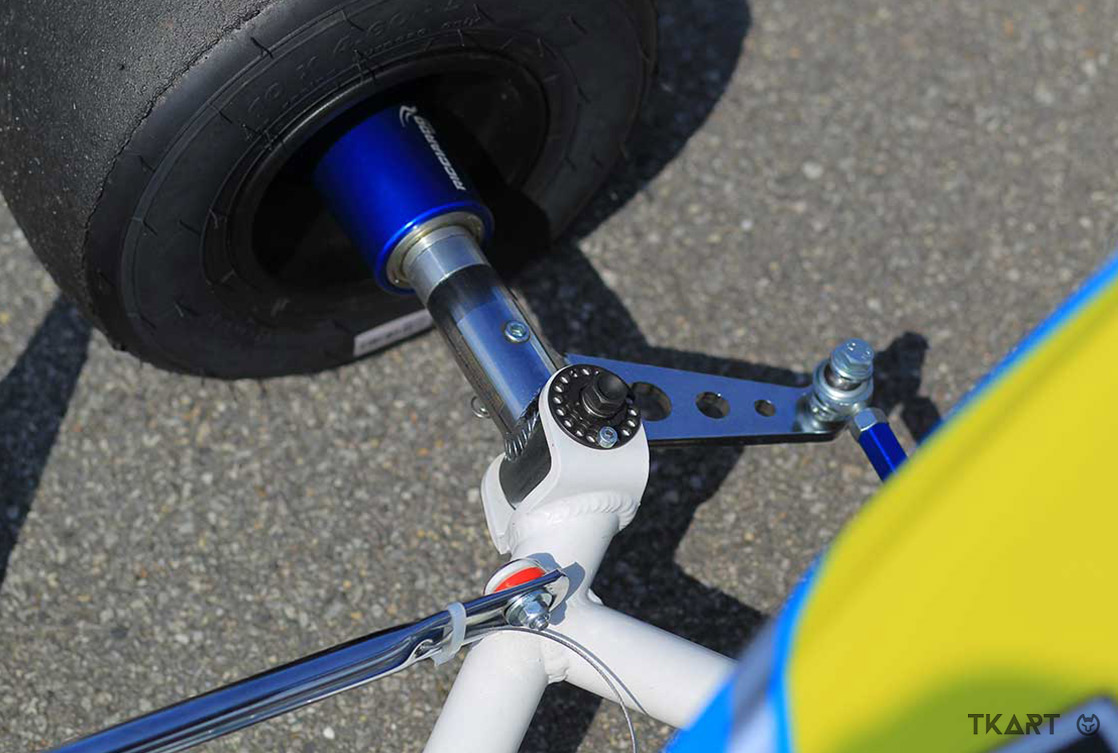
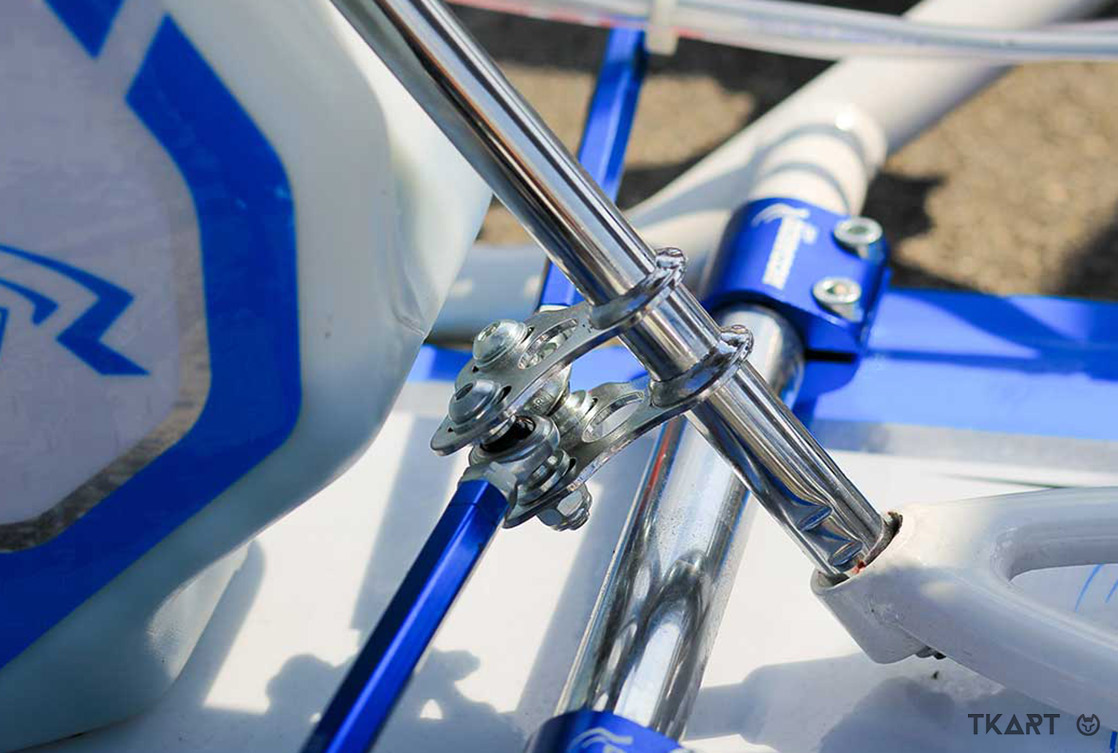
Above, another view of the new stub axle with interchangeable shaft. Below, the adjustable steering column support.Read more
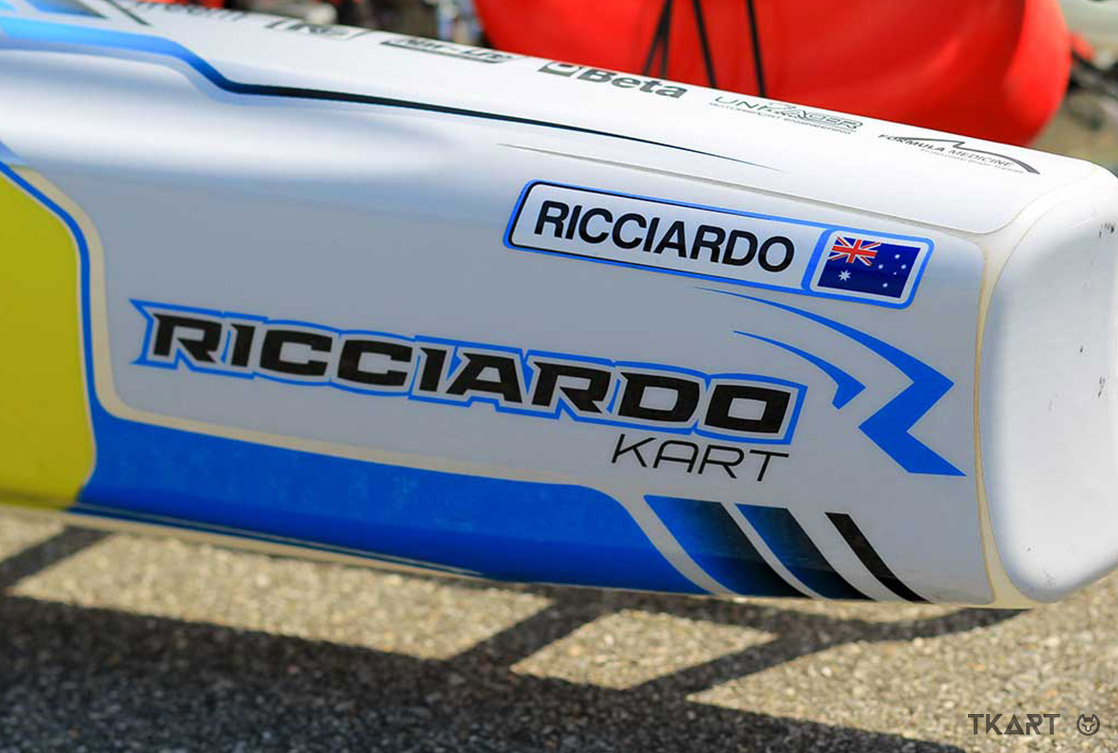
The side and rear fairings of Ricciardo Kart vehicles are by Freeline, while the front spoiler is a KG model. Side pods are connected to the relative frame supports by way of springsRead more
The other huge innovation are stub axles with multiple-hole brackets for variable attachment of the steering rods (when we tested, they were still in the experimental phase): the farther out you attach the rod, the easier to drive, especially going into corners.
Vice versa, if you shift towards the inner holes. What’s new about the unit, though, isn’t just the multiple-hole bracket solution. In fact, the stub axle itself comes with a removable hollow shaft: unscrew the bolt and you can replace it with a different one (choosing between different material, diameter and rigidity options). Innovation is also the name of the game when it comes to wheel hubs, featuring bigger bushings than past Birel ART models and an additional internal bushing that forms a “compact unit” with the stub axle. Going back to the steering unit, instead: besides being reinforced, what’s new here is the three-way shaft adjustment system (the higher the slot, the less the kart steers and vice versa) and the two-way adjustable steering hub (normal position or angled).
"YOU HAVE 30 SECONDS TO CONVINCE ME I SHOULD BUY YOUR KART"
Continue reading the article This week only, 50% off!
User who is approaching the world of karting for the first time. They have never owned a kart or have had one for only a few months. They lack all the basic and fundamental knowledge of this sport and need information to help them get oriented. They look for answers to questions such as: how do I prepare the fuel mixture? What tools do I need to manage a kart? What are the differences between car tire pressure and kart tire pressure? And how do I transport the kart to the track?
Intermediate
User who has been practicing karting for a longer time, personally managing their own kart. They know the basics of the sport, but want to stay updated on industry developments and receive advice to improve their skills as both mechanic and driver. They look for answers to questions such as: how do I install data acquisition systems and read basic data? How do I best manage tire pressure? How do I refine the gear ratio to improve performance? The practitioner may remain at this level for life, preferring not to deal with overly complex technical topics, but continuing to improve and enjoy karting.
Expert
This is a practitioner who is not satisfied with basic knowledge and wants to explore every aspect of driving and technical setup at the highest level. Their approach is almost professional. The distinction is clear: the practitioner stops when kart-related tasks become complex, for example replacing a piston or a spark plug, without going further into advanced operations such as cylinder honing. The expert, on the other hand, is not afraid to deal with highly complex tasks, such as independently balancing the crankshaft or adjusting the ignition timing.
Sponsored Article
This article was produced in collaboration with an advertiser who supported its publication. The content is part of a promotional initiative and is not part of TKART’s independent editorial production.