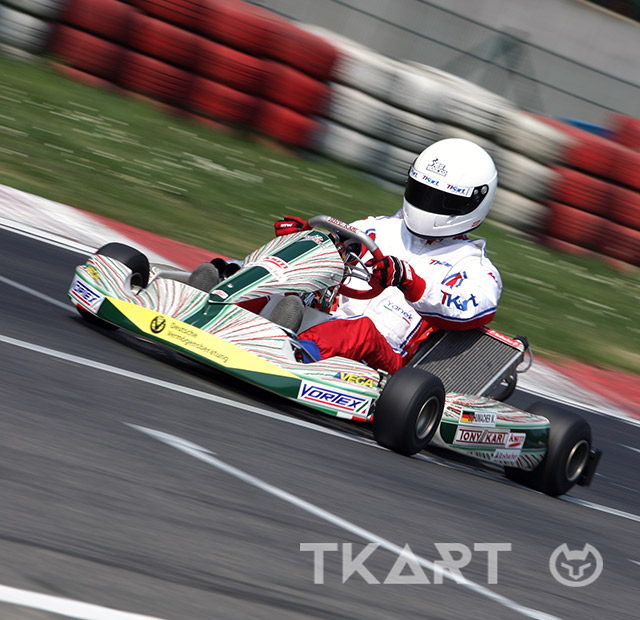
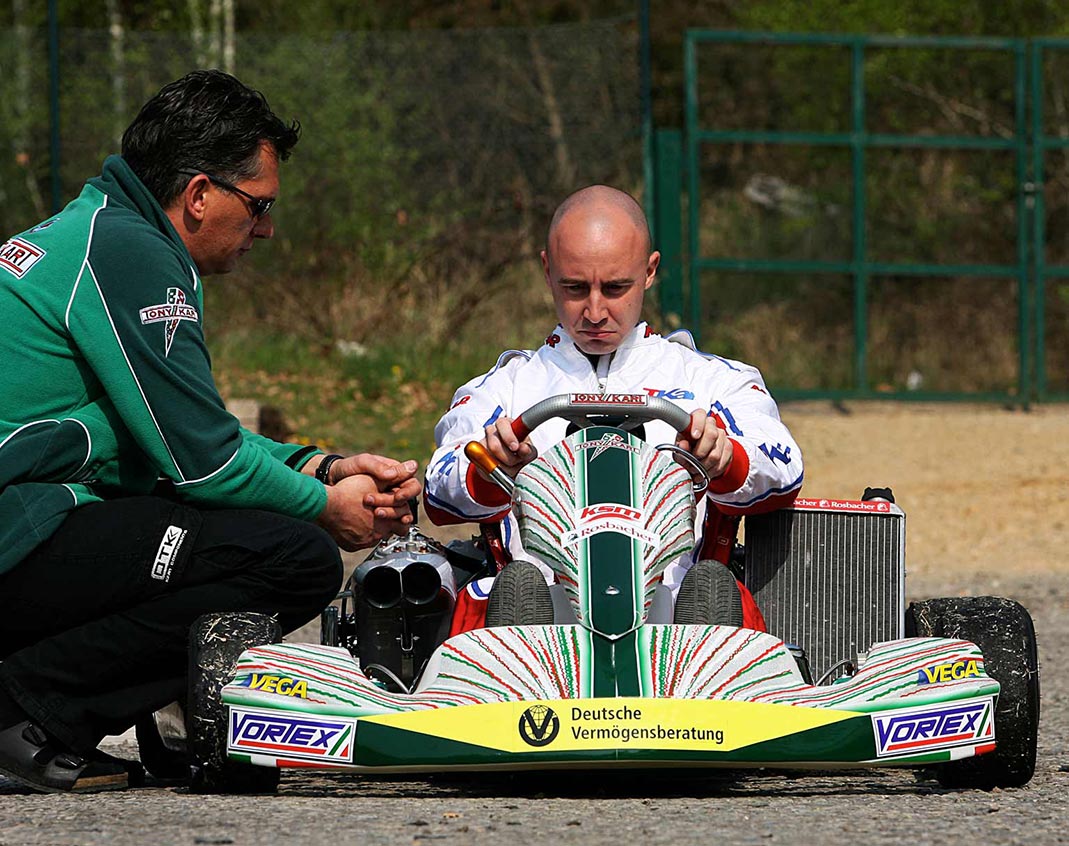
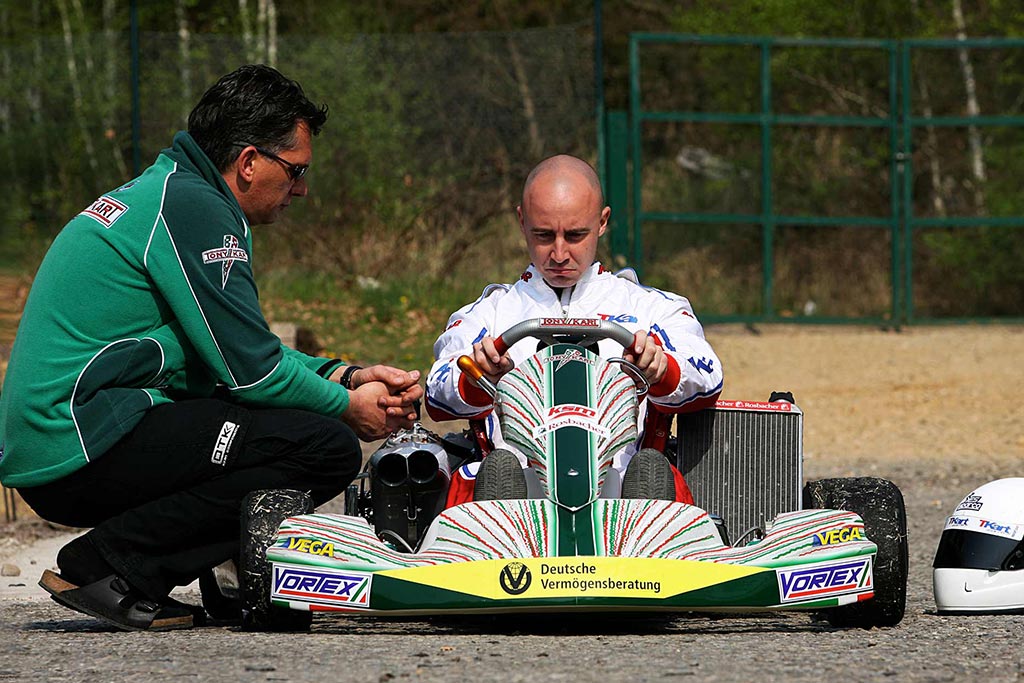
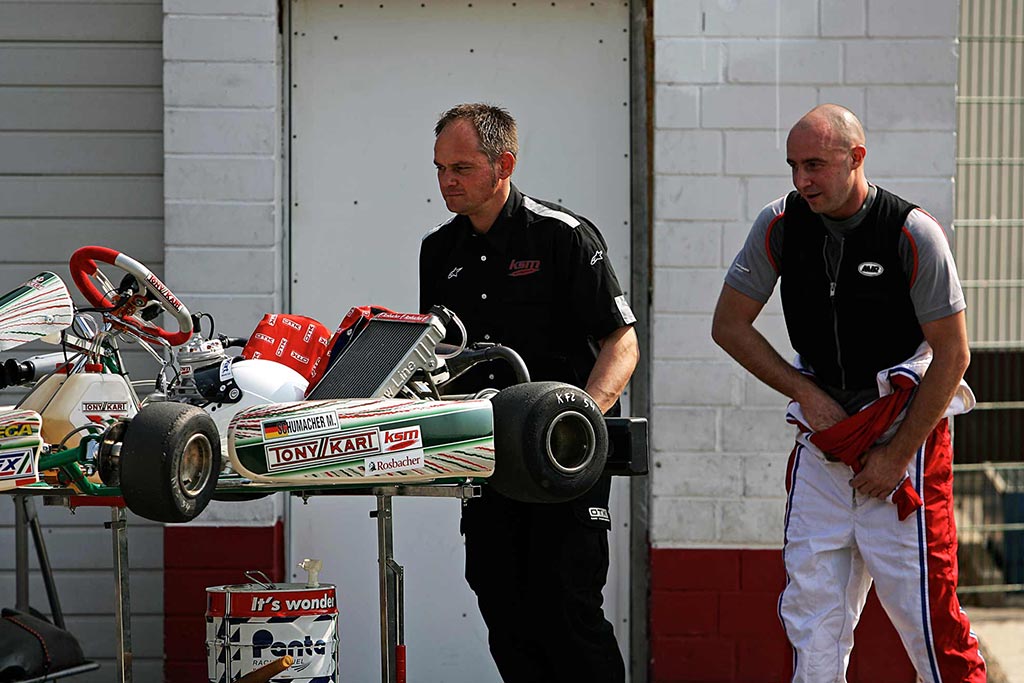
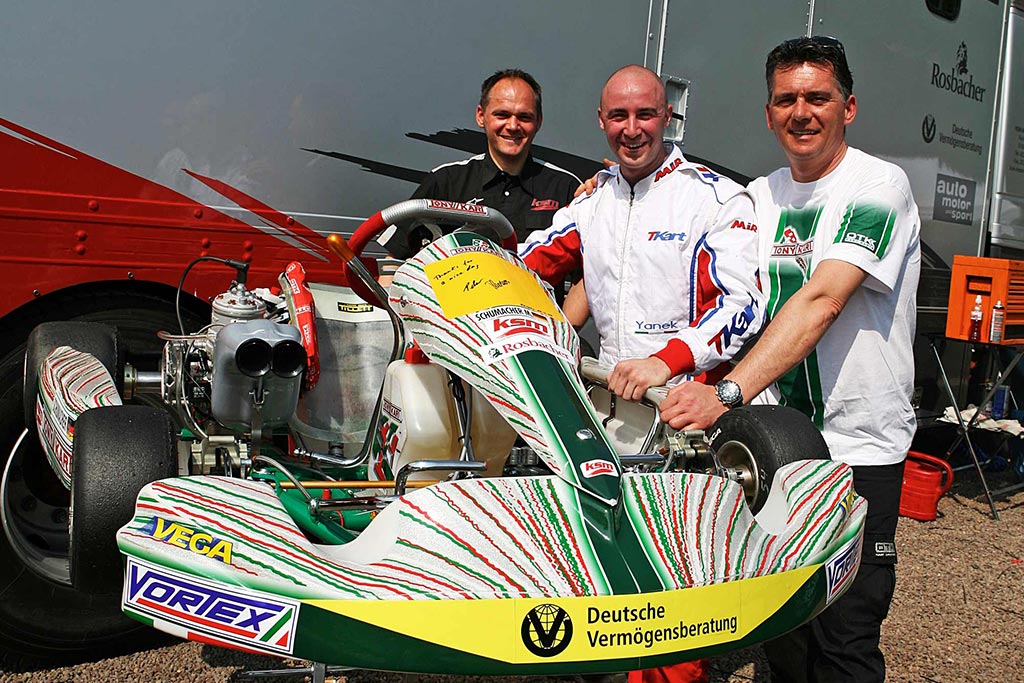
Driving the kart one of the best drivers of all times, on “his” track in Kerpen. A dream... come true!
Top partner
This story dates back a while, but still gives me chills. It began as far back as late 2006, when I saw Michael Schumacher’s kart tests in Lonato. Michael had just retired from F1 and had committed to spending a day on track to help with Tony Kart and Vortex product development. I couldn’t believe that a seven-time world champion could still be so deeply in love with karting. I remember thinking: “Alright, with an F1 there’s no arguing, I’d slam it into the pit wall. But on a kart, how would I do against Michael Schumacher?”. In other words: here is your average Sunday karter, potentially bald, about 1 meter and 80 tall, who trains on karts something like 10-15 times a year, right? How much dust would he have to bite in a challenge against the strongest driver of all times? Some time went by, but I had made my mind up - I wanted to make it happen. So, one day I decided to ring up Mister Peter Kaiser.
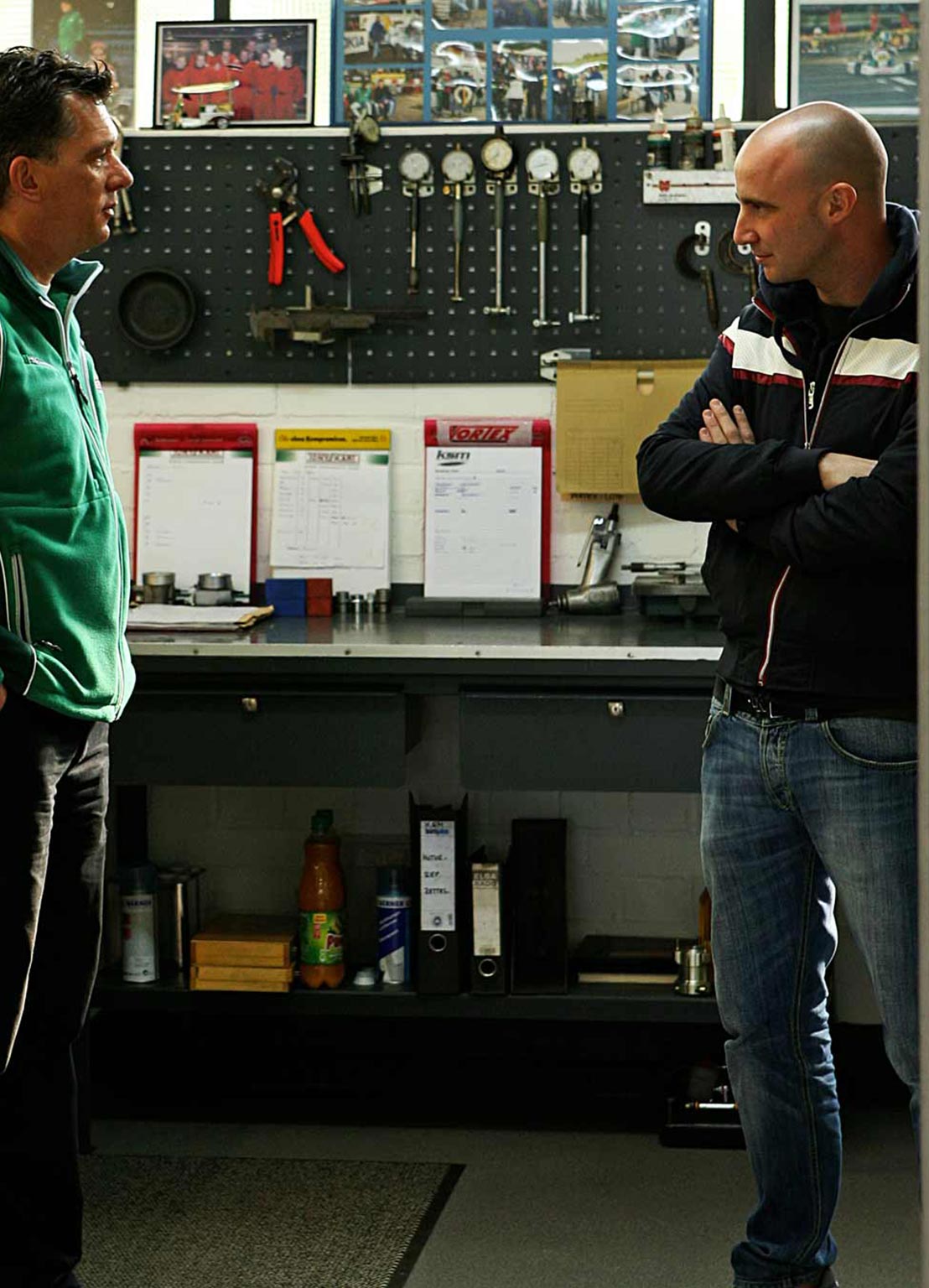
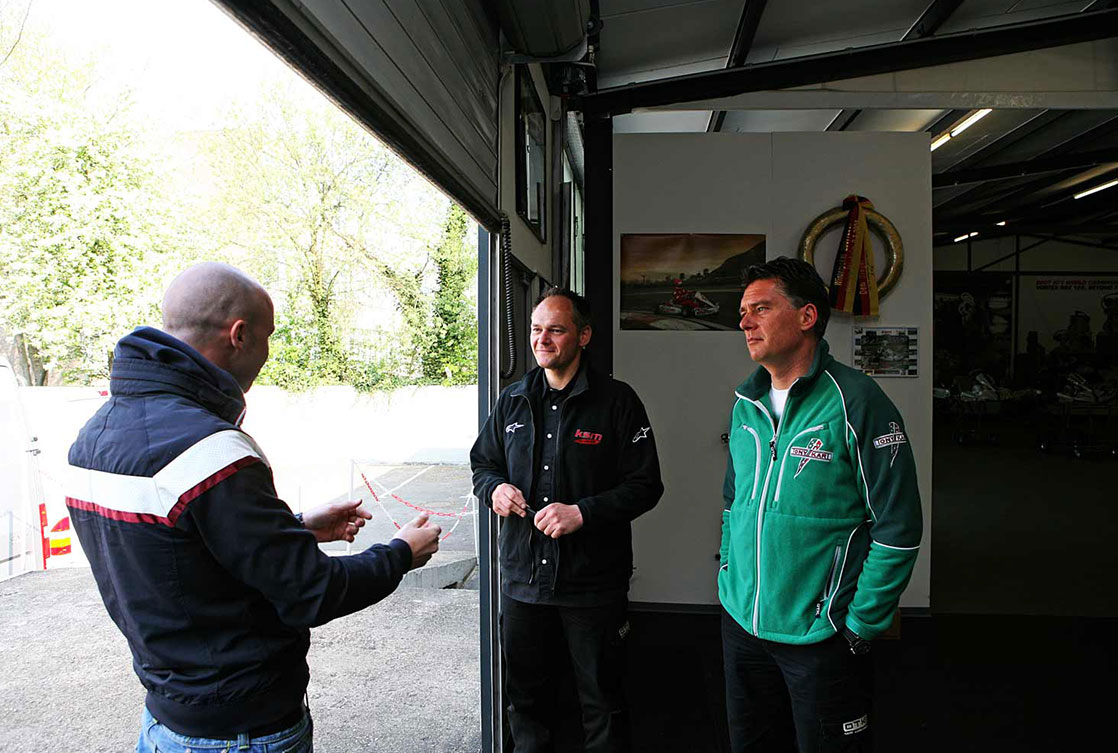
TKART director Yanek Sterzel in the shop with Peter Kaiser, Michael Schumacher’s dear friend. The company they founded with Thomas Muchow is called KSM, from their initialsRead more
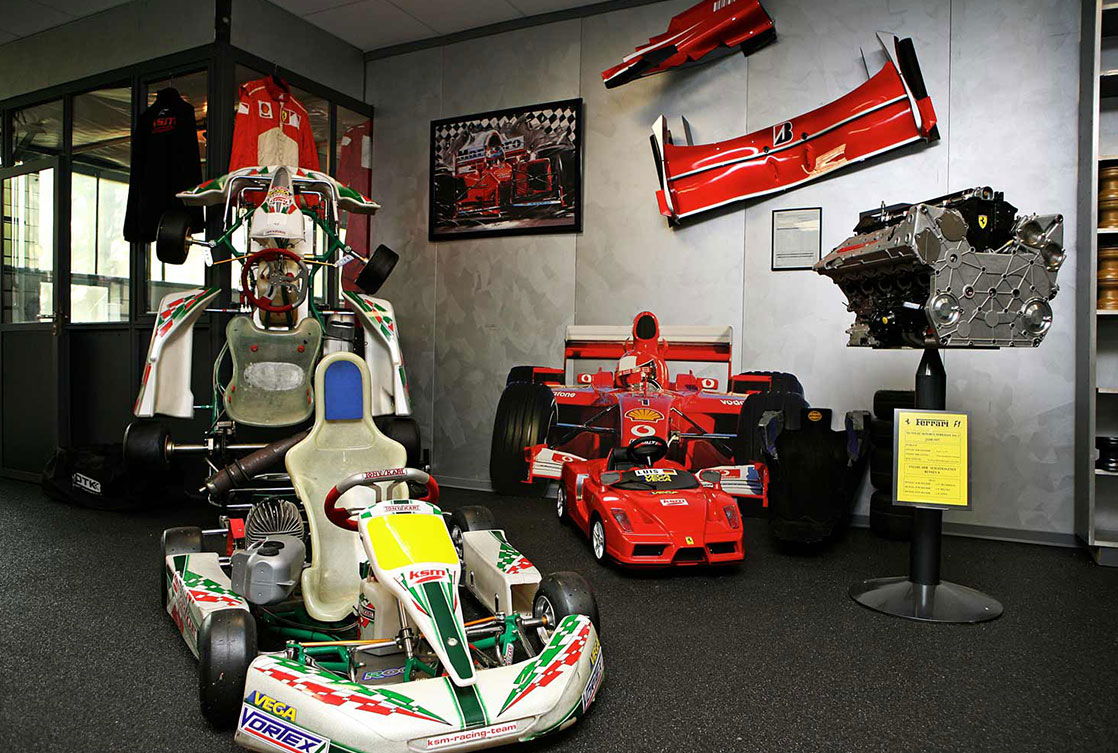
In KSM, the company founded by Kaiser, Schumacher and Muchow, traces of the seven-time F1 world champion are everywhere: from his olf karts to his Ferrari F1Read more
“TAKE YOUR AVERAGE KARTER, WHO TRAINS HERE AND THERE: HOW MUCH OF A GAP COULD HE GET FROM THE BEST DRIVER OF ALL TIMES ?”
Kaiser is a close friend of Schumacher’s: together with thier buddy Thomas Muchow they founded KSM (Kaiser-Schumacher-Muchow). Besides, Kaiser has been in karting forever: he used to manage the shop at the Kerpen track (the one where Michael Schumacher was “born and raised”, competitively speaking), he has a real team that is at the forefront of major races, and he is the importer for Germany of Tony Kart, Vortex, ROK, Ibea and Vega products. Unexpectedly, Peter welcomed my wild proposal with unmotivated kindness and enthusiasm... something I still can’t explain to this day! What matters is that we agreed on the date and place: 15 April 2009, Kerpen. There was just a small detail that threw me off: the kart was going to be a Tony Kart/Vortex KZ. I shyly tried to plead my case: “I’ve always used non-shifters...”; but Peter wouldn’t budge: “Michael has never raced a KF in Kerpen, only KZs...”. End of story. The only concession I got was the possibility to do two stints: the first one “cold turkey”, without time to train; the second, six months later, after following a prep program suggested by Kaiser and Muchow. After my initial burst of elation passed, I was inevitably, assailed by doubts: I had driven a 125 shifter maybe twice in my life and now I was going to try Schumi’s kart - his very own. And backed not by “Joe, the mechanic”, but by Peter Kaiser and Thomas Muchow. Was I f’n crazy?!
Continue reading the article by subscribing for only 0.96 € / week
User who is approaching the world of karting for the first time. They have never owned a kart or have had one for only a few months. They lack all the basic and fundamental knowledge of this sport and need information to help them get oriented. They look for answers to questions such as: how do I prepare the fuel mixture? What tools do I need to manage a kart? What are the differences between car tire pressure and kart tire pressure? And how do I transport the kart to the track?
Intermediate
User who has been practicing karting for a longer time, personally managing their own kart. They know the basics of the sport, but want to stay updated on industry developments and receive advice to improve their skills as both mechanic and driver. They look for answers to questions such as: how do I install data acquisition systems and read basic data? How do I best manage tire pressure? How do I refine the gear ratio to improve performance? The practitioner may remain at this level for life, preferring not to deal with overly complex technical topics, but continuing to improve and enjoy karting.
Expert
This is a practitioner who is not satisfied with basic knowledge and wants to explore every aspect of driving and technical setup at the highest level. Their approach is almost professional. The distinction is clear: the practitioner stops when kart-related tasks become complex, for example replacing a piston or a spark plug, without going further into advanced operations such as cylinder honing. The expert, on the other hand, is not afraid to deal with highly complex tasks, such as independently balancing the crankshaft or adjusting the ignition timing.
Sponsored Article
This article was produced in collaboration with an advertiser who supported its publication. The content is part of a promotional initiative and is not part of TKART’s independent editorial production.