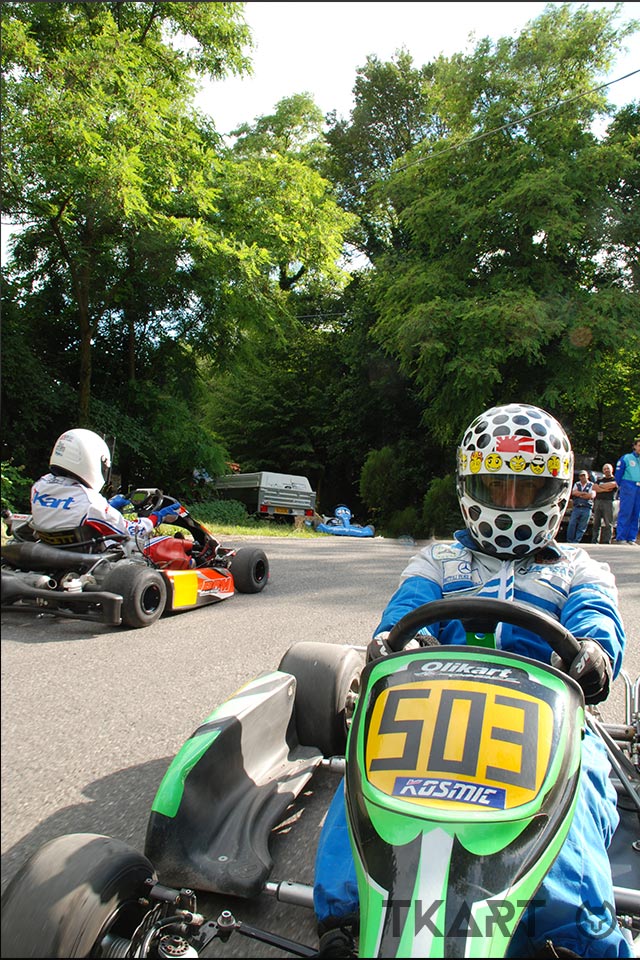
1,160 meters of bends with gradients up to 15%. A kart with no engine hurtling downhill
versus a KZ kart racing uphill on the same road.
Which one wins the madcap challenge?
Top partner
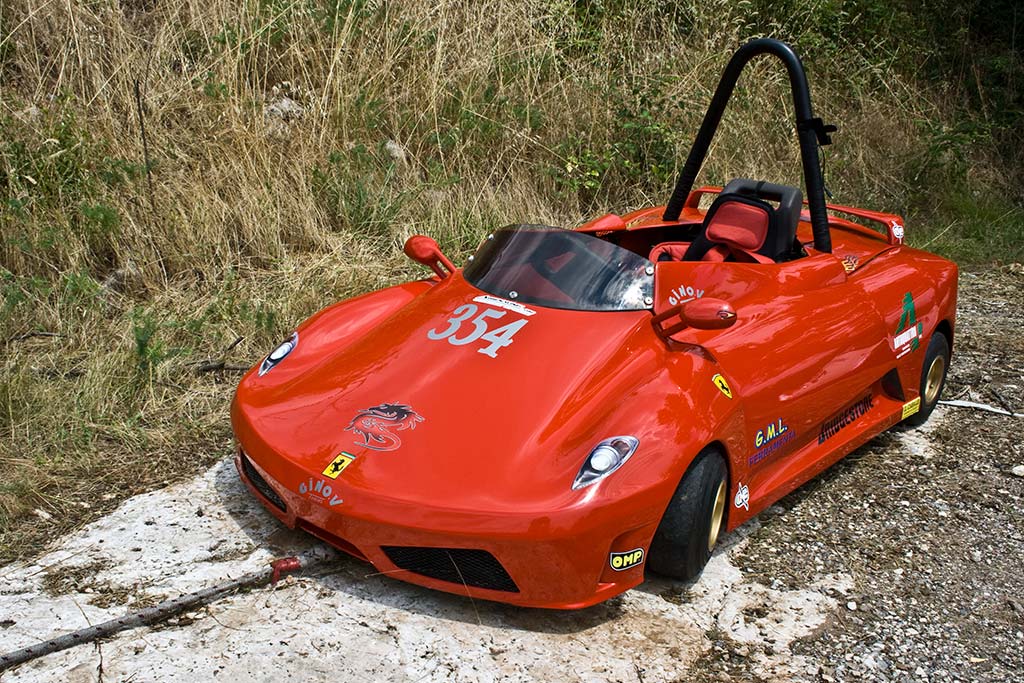
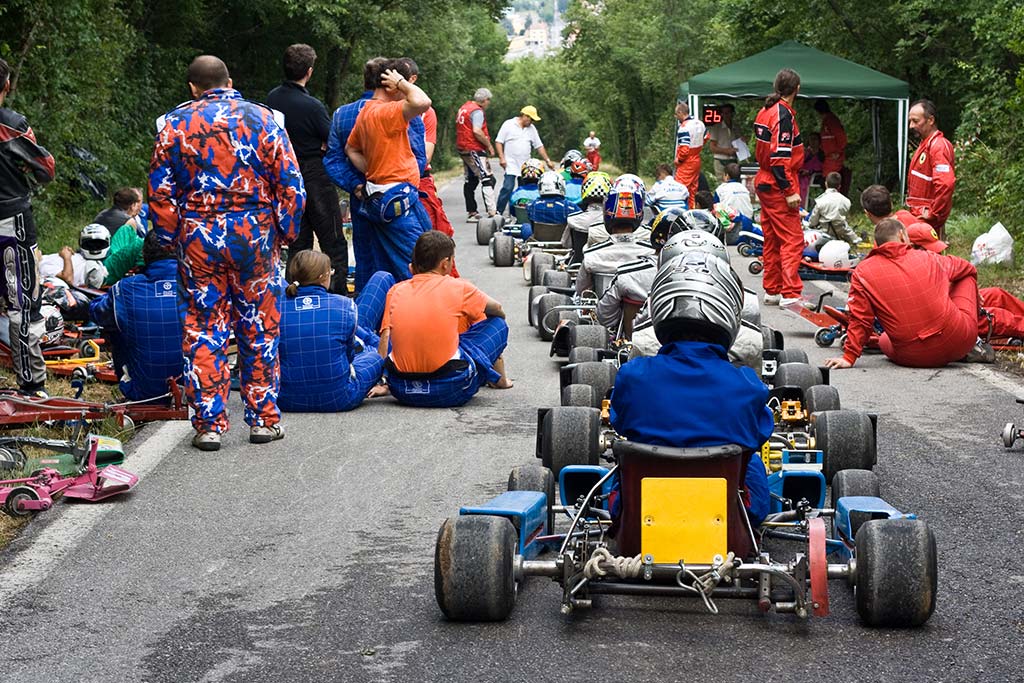
How do you remain indifferent when you learn that there is a downhill kart race in a small town not far from Lake Garda? Easy: you don’t! In fact, the race is not an impromptu game played by a few lunatics who meet up on Sundays, but an official championship race regulated by the Italian Cart’s Federation... consisting of a few lunatics who meet up on Sunday. It has its own regulations, timekeepers and various “classes” that compete: from karts that are more or less similar to the ones we are familiar with, only without engines, to two-seater vehicles, sleds with wheels, etc. This is enough for us to understand that it’s an opportunity not to be missed and, above all, to arouse our curiosity about which is faster: a kart without an engine hurtling downhill or a 125 shifter racing uphill on the same road. The answer is not that obvious, because there are several doubts in our minds: “How quick are these karts downhill?”. “How will a traditional kart behave in an environment so markedly different from a race track?”.
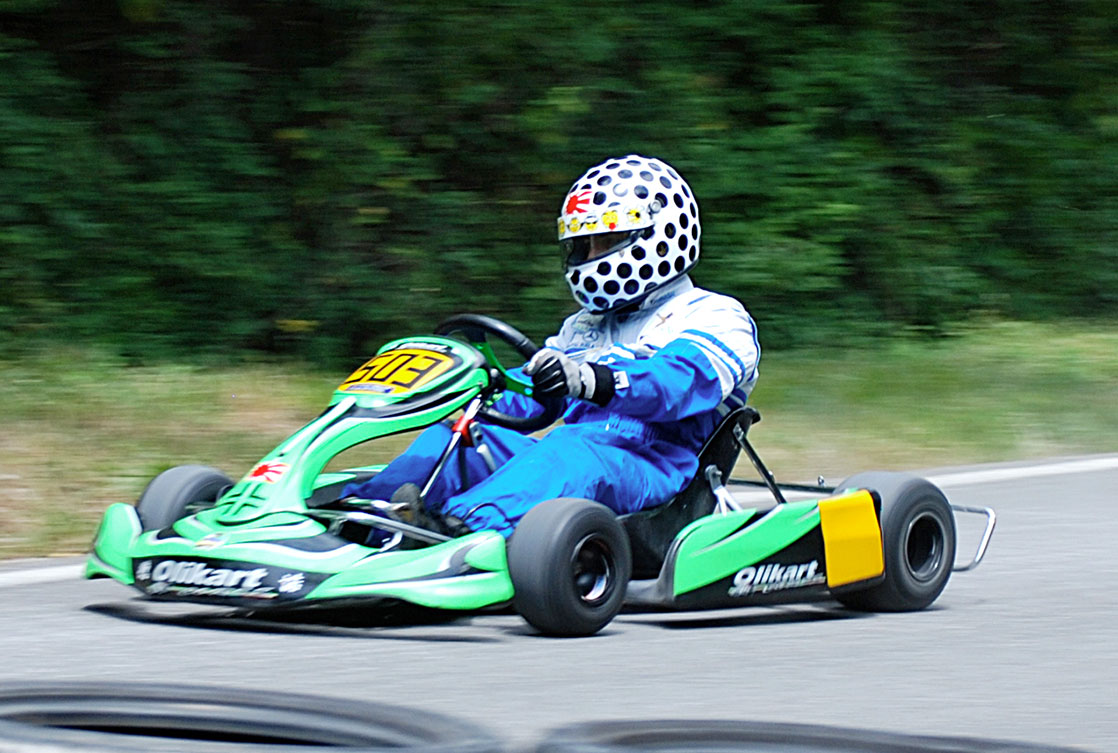
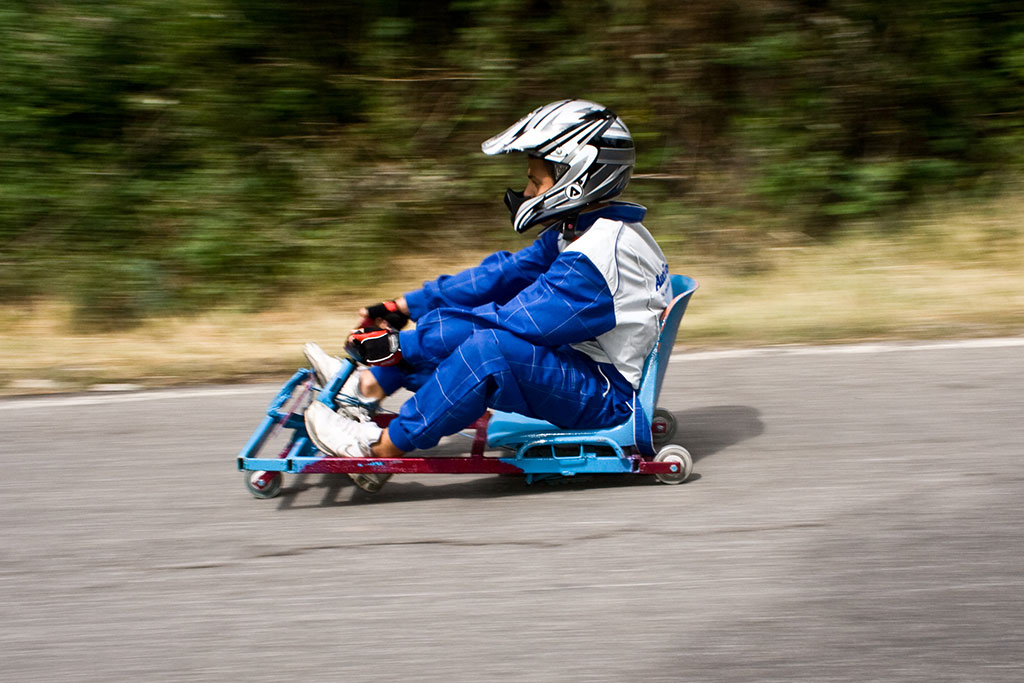
The downhill kart is made by Olikart, an Italian brand of a small manufacturer near Brescia, with chassis and “artigianal” components producted by MRK KartRead more
“DOWNHILL KARTS DON’T HAVE AN ENGINE TO GET YOU OUT OF TROUBLE: IF YOU MESS UP THE BRAKING, YOU CRASH” Spartaco Targhetti
(downhill kart driver)
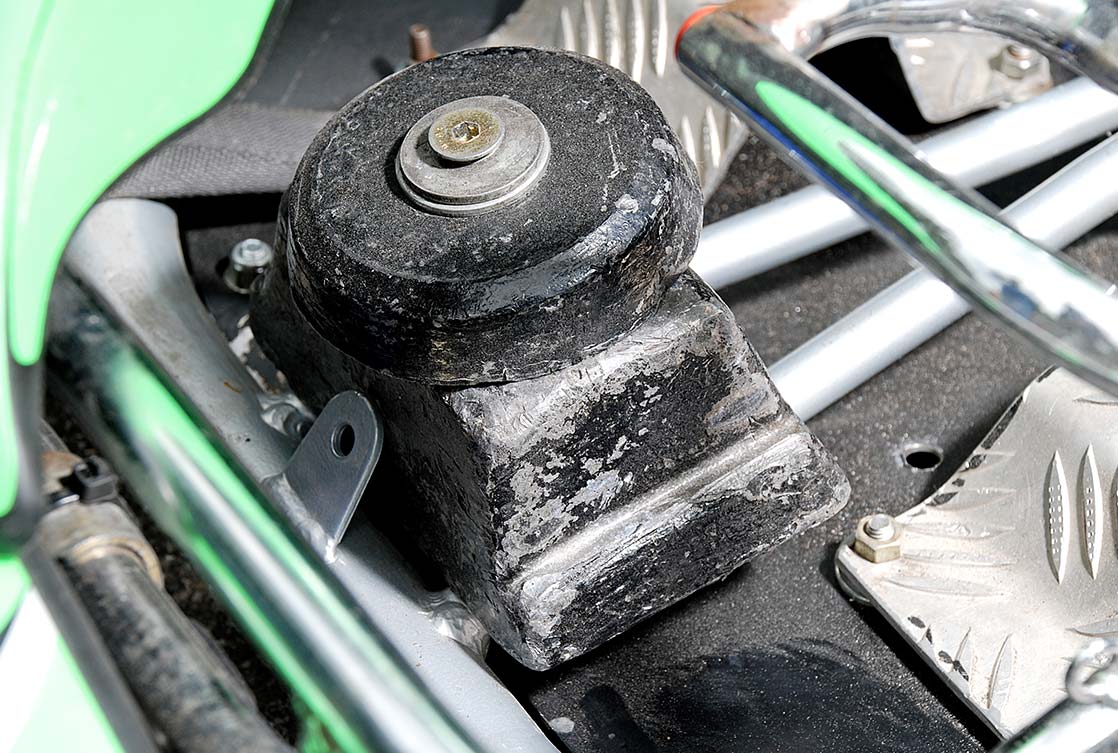
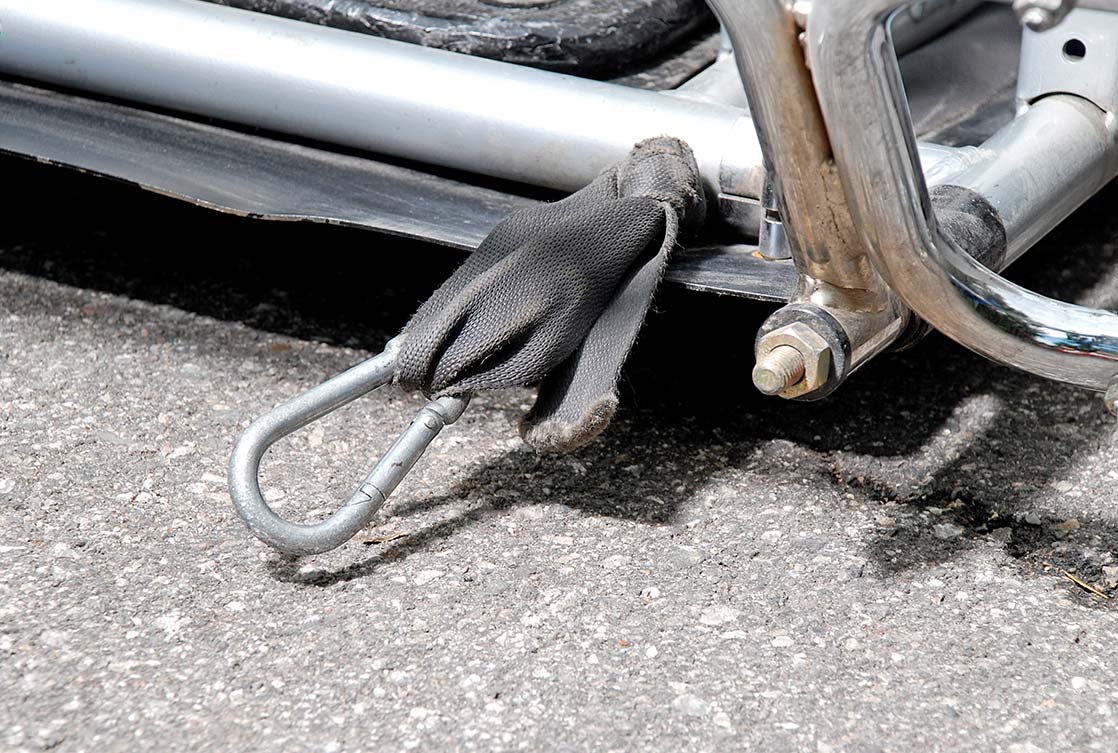
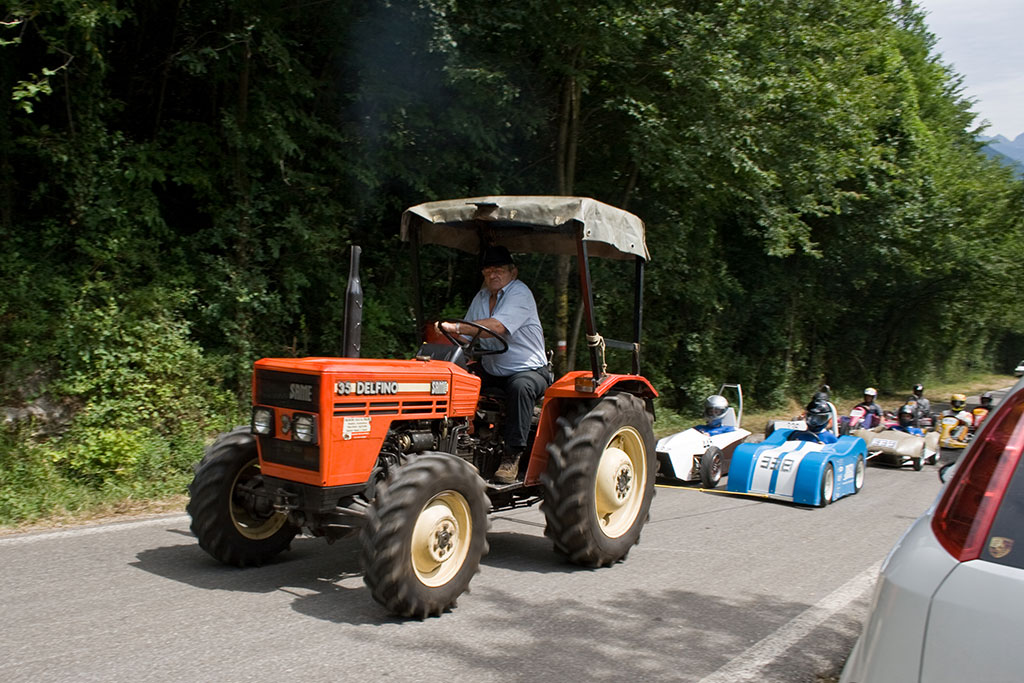
Two features of the downhill kart: a small weight placed at the front (downhill karts need a lot of weights to achieve the maximum allowed limit of 175 Kg) and the carabiner with which to hook the kart to the tractors so that it can be brought back up to the top of the climbRead more
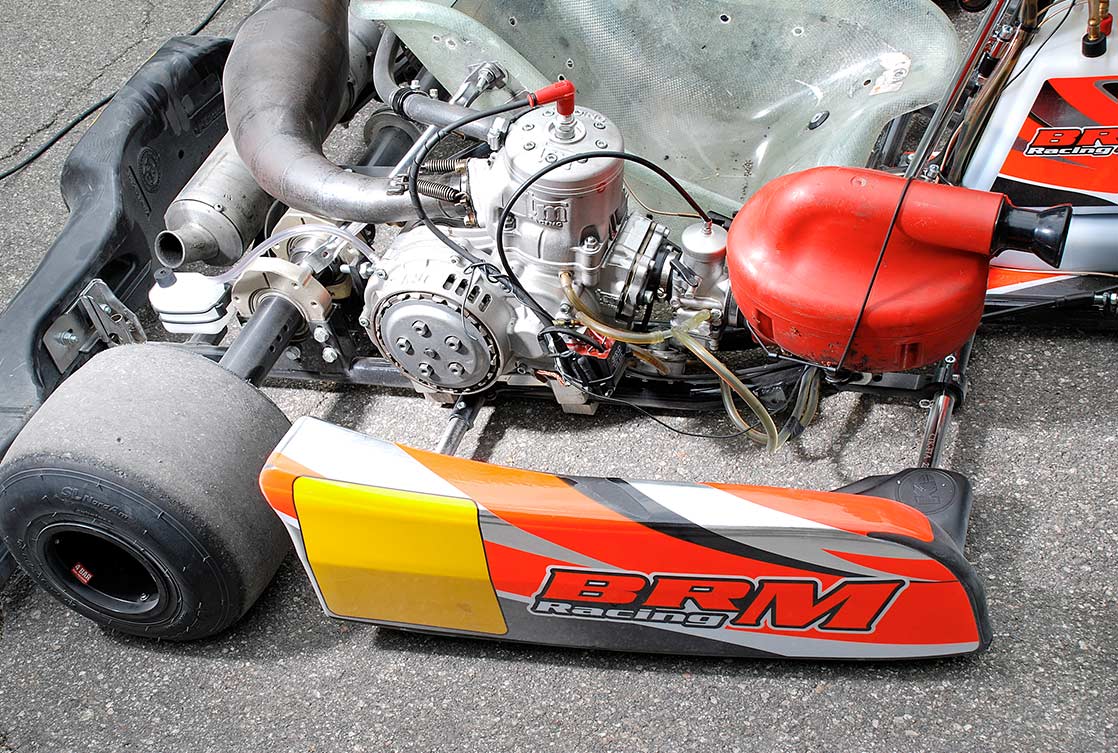
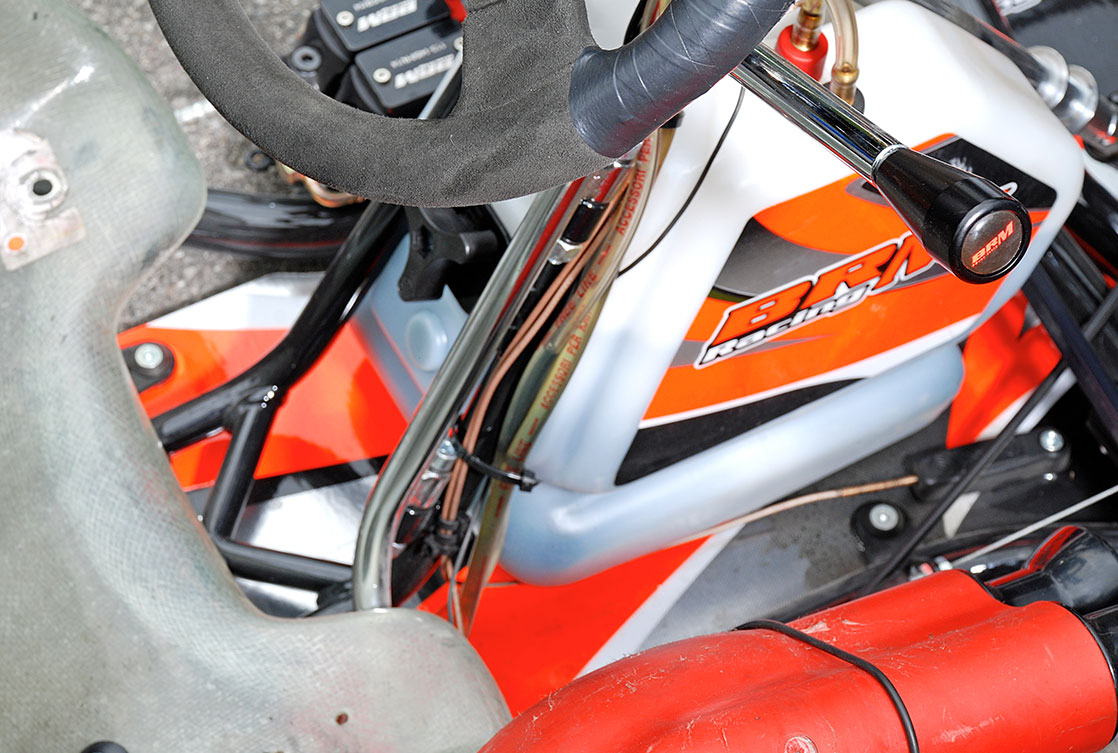
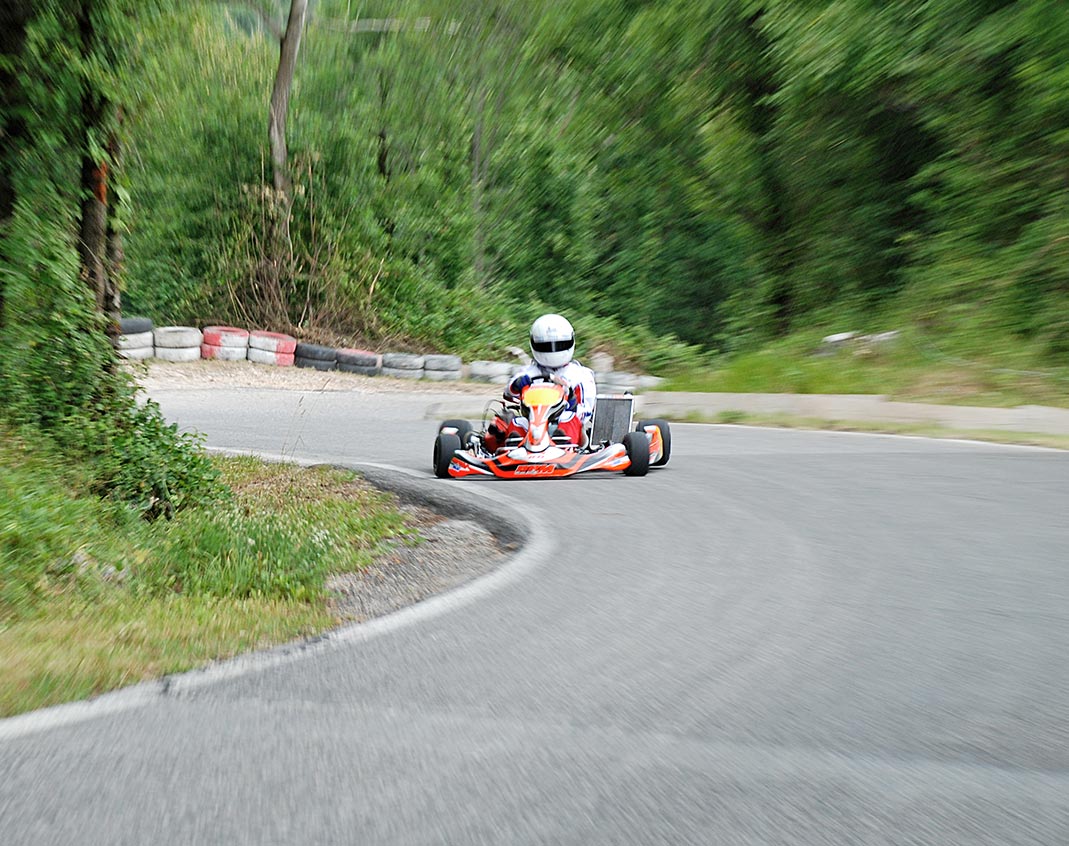
The kart with the engine is a BRM GPM66 KZ with a TM engine. BRM is a manufacturer near Brescia, with a full range of products and dealers in many countries around the world.Read more
We do have one certainty, though. In fact, we have two: our “contact”, named Spartaco, a former Rotax kart driver who now dedicates himself to downhill races, and our “real” driver, Alberto, who has been involved in karting for years as a mechanic and all-rounder, as well as being someone who has already driven karts on the long Ring circuit [the article is available on the same TKART channel and is called “Once in a lifetime”]. The karts involved in the challenge are “made in Brescia” and its surroundings. For the downhill: an Olikart, featuring a “handmade” chassis and parts produced by MRX Kart. For the uphill: a BRM model GPM66 KZ with TM Racing engine. Having arrived at the location, Spartaco makes the introductions: “Everyone likes the race in Gavardo. It’s a little like Spa is in F.1... The slope is steeper at the beginning, with few corners which require braking, while the tight hairpins are only at the end of the 1,200 metre route, where downhill speeds become very fast”. For our man Alberto, who is listening, reconnaissance of the route is the opposite, since he’s starting at the end and is racing uphill. His comment? “I can’t wait!” While the enthusiasm of the two drivers is similar, the same cannot be said for the two karts that, placed next to each other, highlight their differences.
Continue reading the article by subscribing for only 0.96 € / week
User who is approaching the world of karting for the first time. They have never owned a kart or have had one for only a few months. They lack all the basic and fundamental knowledge of this sport and need information to help them get oriented. They look for answers to questions such as: how do I prepare the fuel mixture? What tools do I need to manage a kart? What are the differences between car tire pressure and kart tire pressure? And how do I transport the kart to the track?
Intermediate
User who has been practicing karting for a longer time, personally managing their own kart. They know the basics of the sport, but want to stay updated on industry developments and receive advice to improve their skills as both mechanic and driver. They look for answers to questions such as: how do I install data acquisition systems and read basic data? How do I best manage tire pressure? How do I refine the gear ratio to improve performance? The practitioner may remain at this level for life, preferring not to deal with overly complex technical topics, but continuing to improve and enjoy karting.
Expert
This is a practitioner who is not satisfied with basic knowledge and wants to explore every aspect of driving and technical setup at the highest level. Their approach is almost professional. The distinction is clear: the practitioner stops when kart-related tasks become complex, for example replacing a piston or a spark plug, without going further into advanced operations such as cylinder honing. The expert, on the other hand, is not afraid to deal with highly complex tasks, such as independently balancing the crankshaft or adjusting the ignition timing.
Sponsored Article
This article was produced in collaboration with an advertiser who supported its publication. The content is part of a promotional initiative and is not part of TKART’s independent editorial production.